
Cognitivism is a theory of learning that focuses on the thought processes behind learning. Emerging in the 1950s and 1960s as a response to behaviorism, which emphasized observable behaviors without considering the mind’s internal workings, cognitivism shifts the focus to understanding how we process and store information.
Key Researchers
Jean Piaget (1896 – 1980)
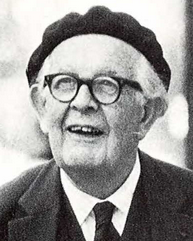
Jean Piaget was a Swiss psychologist renowned for his pioneering work in child development and his influential contributions to cognitive psychology. His theory of cognitive development has profoundly shaped our understanding of how children acquire knowledge and think about the world.
Piaget put forward four stages of cognitive development: Sensorimotor Stage (0-2 years), Preoperational Stage (2-7 years), Concrete Operational Stage (7-11 years), and Formal Operational Stage (12 years and up).
Piaget’s theories have influenced educational practices by emphasizing the importance of developmentally appropriate activities, hands-on learning, and the need to consider the cognitive development stage of learners when designing instruction.
Lev Vygotsky (1896 – 1934)

Lev Vygotsky was a Soviet psychologist best known for his work in developmental psychology and his contributions to cognitivism, particularly through his socio-cultural theory of cognitive development. Vygotsky’s most notable contributions to the field of cognitivism, and by extension the field of education, were Socio-Cultural Theory the Zone of Proximal Development (ZPD), the latter of which gave rise to the concept of scaffolding.
Vygotsky’s theories continue to influence educational practices, emphasizing the importance of social context, interaction, and culturally responsive teaching methods in fostering cognitive development.
Jerome Bruner (1915 – 2016)

Jerome Bruner was a prominent figure in the field of cognitivism, contributing significantly to our understanding of how the mind processes information and how this can be applied to education.
Bruner proposed that cognitive development involves the acquisition of three modes of representation: enactive (learning through actions), iconic (learning through images), and symbolic (learning through language). These modes reflect the ways individuals construct and internalize knowledge.
Albert Bandura (1925 – 2021)

Albert Bandura was a central figure in the field of cognitivism, particularly known for his contributions to understanding how learning occurs through observation, imitation, and modeling.
Bandura proposed that people learn from one another through observation, imitation, and modeling. This theory integrates cognitive processes with social influences, emphasizing that learning can occur without direct reinforcement.
Bandura introduced the concept of self-efficacy, which refers to an individual’s belief in their ability to succeed in specific situations. High self-efficacy influences the choices people make, their effort, perseverance, and resilience. It plays a crucial role in cognitive development and motivation.
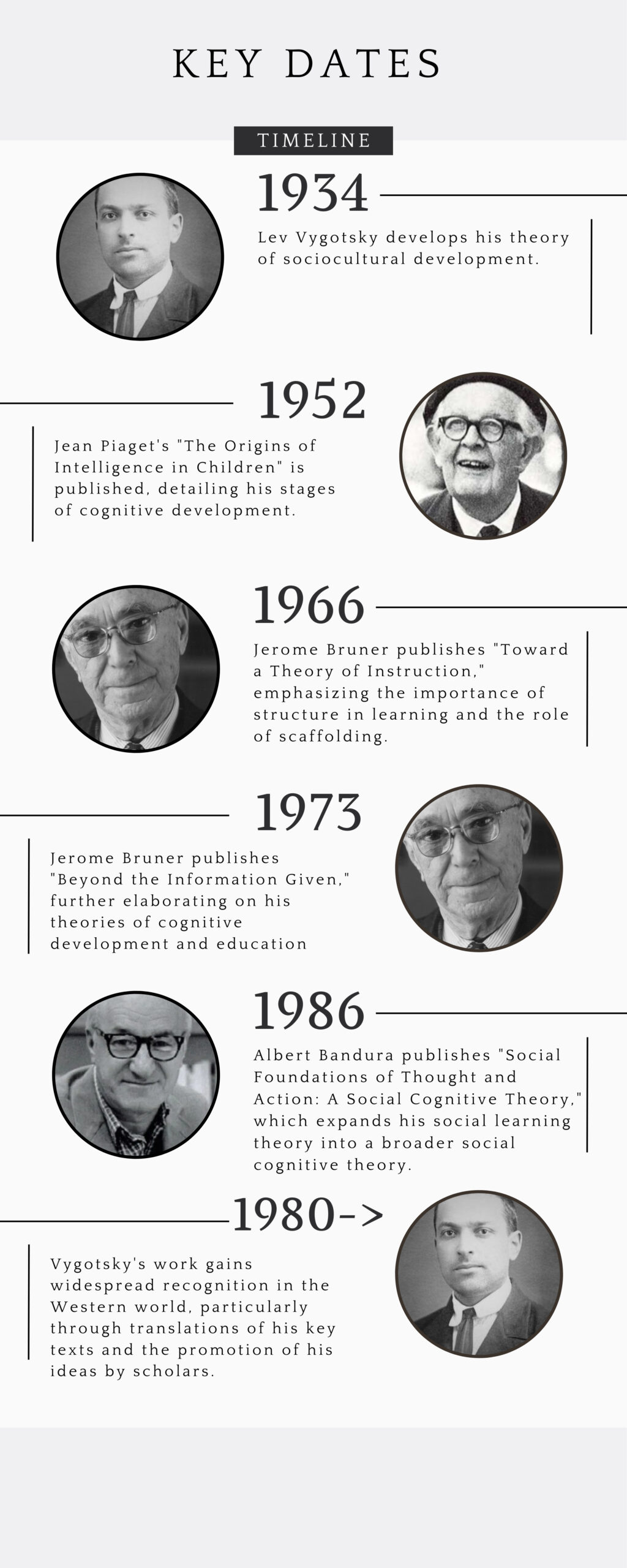
Key Dates
Infographic (click to expand)
Discussion | What are the implications of cognitivism for instructional design?
Cognitivism has had a profound impact on instructional design by shifting the focus from observable behaviors to understanding the internal cognitive processes of learners. By designing instruction that aligns with how the mind processes information, educators can create more effective and meaningful learning experiences. The implications of cognitivism for instructional design are significant and multifaceted:
Emphasis on Mental Processes
Information Processing: Instructional design should consider how learners perceive, encode, store, and retrieve information. This involves organizing content in ways that align with cognitive structures, such as using chunking, sequencing, and scaffolding.
Attention: Effective instructional design should capture and maintain learners’ attention. This can be achieved through varied instructional methods, engaging content, and interactive activities.
Structured Learning Environments
Schema Theory: Instruction should build on learners’ existing knowledge (schemas) and help them integrate new information. This means providing background knowledge, connecting new information to prior knowledge, and using advance organizers.
Scaffolding: Instruction should provide temporary support to learners to help them achieve higher levels of understanding and skill than they could on their own. This support is gradually removed as learners become more proficient.
Active Learning
Metacognition: Learners should be encouraged to think about their own thinking processes. Instructional design can incorporate strategies to develop metacognitive skills, such as self-assessment, reflection, and goal-setting.
Problem-Solving: Learners should engage in problem-solving activities that require them to apply knowledge and think critically. Case studies, simulations, and project-based learning are effective methods.
Learner-Centered Design
Individual Differences: Instruction should be tailored to accommodate individual differences in learners’ cognitive abilities, prior knowledge, and learning styles. Adaptive learning technologies can personalize instruction based on learner performance.
Motivation and Engagement: Understanding the cognitive aspects of motivation (e.g., self-efficacy, intrinsic motivation) can help in designing instruction that motivates and engages learners.
Opinion
In the context of higher education, cognitivism offers several strengths and limitations when applied to instructional design. Lets start off by exploring some of the strengths that can be found in making use of a cognitivist approach to learning in a higher education context:
Active Engagement
Interactive Methods: Techniques such as problem-based learning, case studies, and simulations align well with cognitive principles, promoting active engagement and deeper processing of information.
Development of Critical Thinking
Higher-Order Thinking: Cognitivism emphasizes the development of critical thinking skills. In higher education, where the aim is to develop analytical and evaluative skills, this is particularly beneficial.
Instructional Strategies
Scaffolding and Feedback: Providing structured support and timely feedback helps students build on their prior knowledge and correct misunderstandings, which is essential for mastering complex subjects in higher education.
While cognitivism may seem like an ideal learning theory for a higher education environment, it is important to consider that there are some limitations, such as:
Neglect of Social Context
Limited Focus on Social Interactions: Cognitivism primarily focuses on individual mental processes and often overlooks the importance of social interactions and cultural context in learning. This can be a limitation since learning is frequently a social activity, and peer interactions can significantly enhance understanding and knowledge construction.
Complexity of Mental Processes
Difficulty in Measuring Cognitive Processes: Understanding and measuring internal cognitive processes can be challenging. Unlike behaviorism, which focuses on observable behaviors, cognitivism deals with abstract mental processes that are not directly observable, making it difficult to assess and evaluate learning outcomes accurately.
Neglect of Emotional Factors
Emotional and Motivational Aspects: Cognitivism often underemphasizes the role of emotions and motivation in learning. Emotional factors can significantly influence cognitive processes like attention, memory, and problem-solving, and their neglect can lead to an incomplete understanding of the learning process.
Instructional Material
The Material below is a Step-by-Step instructional video on how to build a mechanical keyboard.
The video below followed the Multimedia Principle by providing a clear Step-by-Step video guide with a clear voice over. However, this video could have been greatly improved had the Coherence Principle been more closely adhered to. This was evident by the inclusion of a lengthy sponsor segment at the start of video. This served to distract the leaner as it is extraneous information and could have been better placed at the end, once the learning had occurred.